World War II
The warfare in the Polish territories has taken its toll not only on the Polish nation, but also on the priceless cultural heritage, which during the occupation was stolen and taken away from Poland without any control.
In the post-war era, the actions of successive governments led to the recovery of some of the pieces of art however, others still remain missing.
During World War II, the Germans repeatedly proclaimed the inferiority of the Slav peoples, criticizing or even mocking their cultural and historical achievements.
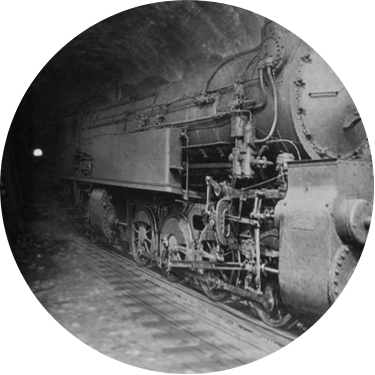
GOLDEN TRAIN
1944 - 1945
Ironically, later during the occupation, they often massively exported Polish works of art and
despite the widely preached slogans of contempt and hatred, the German soldiers scrupulously robbed the priceless items of Polish art – paintings, museum items, church exhibits and even entire monuments were confiscated.
What is more, upon entering Poland the Germans had a list of Polish monuments and their locations, which greatly simplified final exportation of the most valuable monuments to the territory of the Third Reich.
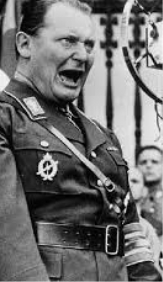
Oftentimes, Polish works of art later entered private collections of Nazi commanders, including, for example, Hermann Göring.
In 1939, a regulation was passed, under which the Third Reich had the right to confiscate all Polish cultural that were in the archives or museums at the time. Private Polish or Jewish collections were also shredded. Finally, the occupiers commandeered all items considered to be valuables, including books, sculptures, or archival coins.
In further actions, the Nazi commanders executed their orders with great zeal, requisitioning all exhibits in areas incorporated into the Reich.
The thoughtless devastation of historic buildings, churches and the hasty accumulation of delicate items in terrible conditions resulted in the almost total destruction of priceless cultural works.
102
libraries
15
museums
3
image galleries
20+
private collections
From the very beginning of the war, German officers in order to “secure Polish heritage” exported works of art from the General Governorate, robbing the works of Rembrandt or Santi from Krakow National Museum. The entire altar of Veit Stoss was dismantled, Leonardo da Vinci’s “Lady with an Ermine” was stolen. All of these would later be taken to German museums. It is estimated that during the German occupation over half a million different kinds of works of art were taken from Poland.
These numbers are of course approximate and do not take into account the activities of the Soviet troops in 1939-1941, and in later years.
After the Second World War
After the Second World War, the situation did not improve. Polish national heritage was not returned – German and Austrian officials would not allow the Polish exhibits to be returned to Polish museums.
Officials, who in 1938-1945 sanctioned the forceful seizing of items of cultural value, made sure that after the war they were not returned to the claimants.
Monuments and works of art looted in Poland were later passed from hand to hand. Currently, it is estimated that they are located all over the world: in Germany, Russia, the United States, Great Britain as well as in Turkmenistan.
After the war, the Polish authorities did everything to regain the lost items of cultural value. In many cases they have actually been returned. Despite many successes in this field, dozens of Polish pieces have not been found or had been destroyed.
Therefore, our mission is the constant and consistent finding of priceless works of art, dispersed throughout the world in the turmoil of war, and bringing them to our homeland.
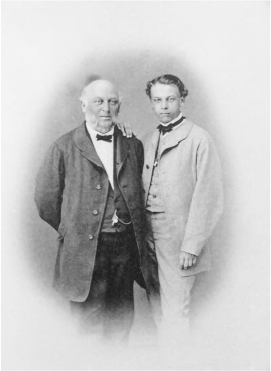
The list of all persons, generals or even personal collaborators of Adolf Hitler, who had their share in further raking of works of art, is long and dates back to 1933. Ernst Büchner, the general manager of the Bavarian State Painting Collection at the time, meticulously incorporated works of art, plundered mainly from Jews, into the collections of Third Reich museums. After the war, in 1957, he remained the manager and would not allow return of exhibits to their rightful owners.
Even the personal photographer of Hitler, Heinrich Hoffmann, a professor of art, had been lured by the cultural items of the occupied nations. He was found guilty of war crimes by the Allies and sentenced to 5 years in prison for plundering over 300 works of art.
Shortly thereafter, by virtue of the acquittal issued by the Bavarian Ministry of Finance, he was released, the estate was returned to him, despite complaints from the Austrian authorities.
1960s
In 1960s the German authorities took action to close the case of the looted works of art and culture. Officially, only the pieces whose owners could not be determined, were auctioned, but as one can easily guess – not much effort was put in to actually find them.
In 1966, the Bundestag again looked into the problem of looted artwork. It was decided that all paintings and exhibits that did not have owners would be distributed to German museums and state offices. And so, Polish monuments were scattered throughout all German districts, quietly and without publicity. The then Minister of the Treasury, Werner Dollinger, could officially announce to the entire nation that the restitution of property stolen during the war was completed.
To this day, there is real aversion among the German custodians and collection holders, to returning the items of Polish culture stolen during the war.
Scandals of Polish People's Republic (PRL)
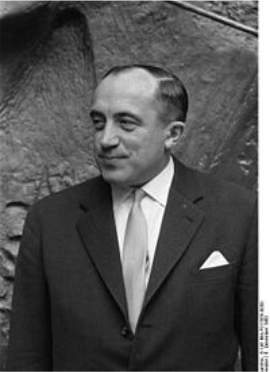
Economic scandals and fraud have always shocked societies. The stories that took place at the time when Poland was made into a soviet state and named Polish People’s Republic, could be used as scenarios for action films. Some of them were widely publicised, others carefully hidden, swept under the rug to protect the guilty parties. The circumstances of many of them have not as yet been explained.
ZALEW scandal
it involved officers of the Ministry of Interior associated with Mieczysław Moczar, who handled smuggling gold, , coins or luxury items. In the course of the investigation conducted in the 1970s, a lot of jewels were found in cottages at Zalew Zegrzyński, which were the property of the Ministry of Interior officers – it was established that smuggling of artwork was not the only form of the group’s activity. Sculptures and paintings were smuggled, which were later sold in Vienna and Switzerland.
The IRON [ŻELAZO] Scandal
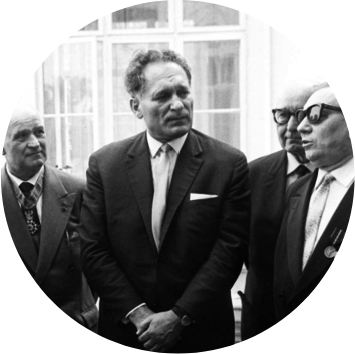
it was related to the clan of Bielsko bandits from the Janosza family. The scandal was exposed at the time of competition for the leadership of the Interior Ministry between generals Czesław Kiszczak and Mirosław Milewski.
The case concerned a group engaged in fraud in auction and jewelery houses, where those in positions of authority and power at that time benefited
FOZZ [External Debt Service Fund] scandal
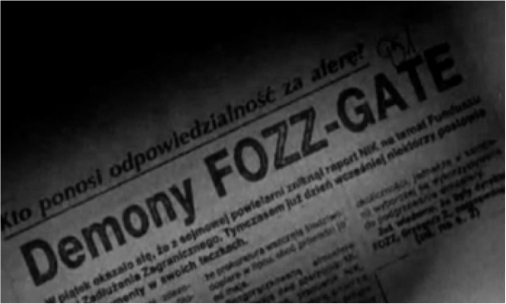
The official purpose of establishing the Fund was the repayment of Polish external debt. Works of art, mainly paintings and sculptures, were a way of accumulating capital. The real task of the fund was to reclaim the external debt of the Polish People’s Republic on the secondary market at much lower prices resulting from low debt prices. According to some investigative journalists, the FOZZ scandal continues to this day.
Current affairs
Further fate of Polish works "abroad"
In 1998, over 6,000 museums and galleries in Germany, were addressed by the secretary of culture, Michael Naumann, requesting control and supervision over the collections held. From among so many museums and institutions, only one foundation sent their reply.
In 2008, a special group was established to study the origin of pieces of art and items of cultural value, under the direction of Bernd Neumann, the representative of the federal government for culture. This institution exists to this day and annually receives 2 million Euros for its activities.
In recent years, various art pieces looted by the Nazis from the National Museum in Warsaw during World War II have been found in auction houses all over the world. mainly in Austria, Germany and the USA.
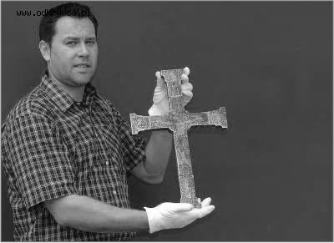
Some recovered items have really amazing and unbelievable stories behind them like for instance the one of 12th-century Passion Cross robbed from the Czartoryski collection was found in a garbage in ZellamSee, Austria. As it turned out, the family of the deceased keeper of the cross, was unaware of its value (400,000 euro!) and they threw it away.
"Defenders" of art
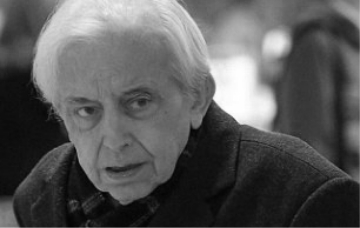
Hildebrand Gurlitt, a German art historian and art dealer, who helped the Nazis to plunder Polish cultural items during the war. He was arrested by American soldiers, only to be released after three days due to lack of evidence. He stubbornly claimed that his pieces he kept had been destroyed during the bombardment of Dresden in 1945. After his death, his son, Cornelius Gurlitt, took over the reins and dedicated his life to protecting his father’s illegal collection, which obviously had not been destroyed.
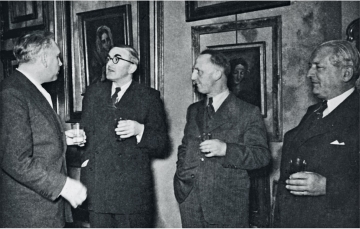
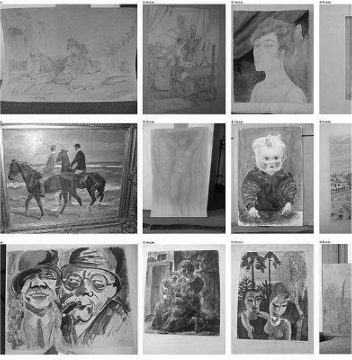
Cornelius’s life was shrouded in mystery, he was like a shadow man, his name hardly ever appeared in any official records- he did not take pension or remuneration, he avoided paying taxes, he did not have any life or car insurance policy.A routine customs control on September 22, 2010, and Cornelius’s very nervous reaction lead to his exposure. The German authorities were investigating Gurlitt for tax evasion; what they found instead was an amassment of art that was immediately, incontrovertibly suspicious. On 28 February 2012 one of the most extraordinary stashes of art since the end of World War II was uncovered. Inside a small flat in a boxy white building, investigators found more than 1,500 works by artists including Picasso, Matisse, Monet, Liebermann, Chagall, Durer, and Delacroix. Some of the pieces were sill framed others were hidden in filing cabinets and suitcases.
The collection was so huge that it took 3 to take all the pieces from the apartment.
It is estimated that with the passage of time and the slow passing away of the war generation, such discoveries will be witnessed more and more frequently.